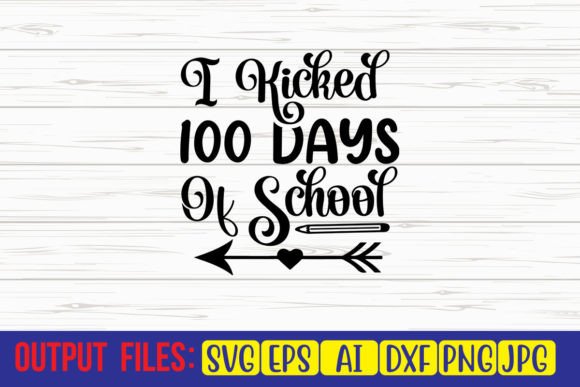
Reviewing the I Kicked 100 Days SVG for Embroidery
As a designer who spends more time staring at stitch simulations than actual thread spools, I approach every new digital embroidery file with a mix of optimism and skepticism. We have all been there: you download a cute graphic, load it into your software, and realize the nodes are a mess or the details are too fine for real-world fabric. That is why I took a close look at the I Kicked 100 Days of School SVG Cut Fil to see if it holds up under the needle. This is not just about whether it looks good on a screen; it is about how it performs as a machine embroidery design in a busy classroom or a hectic morning routine.
First Impressions and Visual Personality
The theme here is unmistakable. The "100 Days of School" milestone is a huge event in elementary education, and parents are always hunting for unique ways to celebrate it. The phrase "I Kicked" implies a playful, energetic vibe, likely paired with imagery of sneakers, feet, or dynamic motion lines. From a Graphics perspective, the layout needs to be bold. In embroidery, subtlety often gets lost in the texture of the fabric. My first observation is that this design relies heavily on clear, readable typography and distinct shapes. If the original vector art is clean, the translation to stitches should be straightforward. However, the mood it creates is casual and fun, which means it belongs on comfortable, durable items rather than formal wear. It feels like a handmade product meant to be worn with pride and probably scraped knees.
Real-World Application: The Sweatshirt Test
To truly evaluate this embroidery project, I imagined stitching it onto a child’s heather grey sweatshirt. This is the most common use case for this type of custom apparel. The fabric of a sweatshirt is thick and forgiving, which is ideal for designs that might have slightly higher stitch density. When I visualize the I Kicked 100 Days of School SVG Cut Fil on this material, the contrast between the thread and the fabric becomes the primary concern. A bright white or neon yellow thread would pop against the grey, making the text legible from a distance. For an Etsy seller or a small shop product owner, this visibility is crucial. Parents want to show off their kid’s achievement, and the design needs to photograph well for social media shares. If the lettering is too thin, it might get swallowed by the fleece texture, so checking the line weight in your digitizing software is a mandatory step before hitting "start."
Navigating Fabric and Hoop Constraints
While sweatshirts are forgiving, other applications require more caution. Let us say you want to use this design on a canvas tote bag design or a structured embroidered patch. Here, the stability of the fabric helps, but you must consider the hoop size. If the design is wide, you might need a 5x7 or even a 6x10 hoop. Always measure your design dimensions against your machine’s maximum area. Furthermore, if you are attempting this on a curved surface like a cap, the distortion can warp the text. The word "Kicked" might look stretched if not properly compensated for in the digitizing phase. For baby embroidery projects, such as a onesie, the fabric is thinner and stretchier. In this scenario, using a cut-away stabilizer is non-negotiable to prevent puckering. The design’s integrity depends entirely on how well you support the fabric during the stitching process.
Technical Considerations for Digitizers
The product description mentions that the download includes SVG, EPS, PNG, DXF, Ai, and Jpeg files, all at 300 DPI. It is important to clarify a common misconception: these are primarily design assets for cutting machines or print-on-demand services, not necessarily pre-digitized embroidery files like PES or DST. As an experienced reviewer, I must advise that if you are using this for embroidery, you will likely need to import the SVG or DXF into your embroidery software to auto-digitize or manually create the stitch paths. This gives you control over the satin stitch width for the borders and the fill stitch pattern for any larger shapes. If you rely solely on auto-digitizing, pay close attention to the corner details. Sharp angles in the vector file can result in messy thread jumps if not properly anchored with tie-ins or underlay stitches. Always run a test on scrap fabric to check for thread breaks or excessive pull.
Commercial Viability and Brand Consistency
For craft business owners, the versatility of this design is its strongest asset. It fits neatly into the seasonal rush of late winter and early spring. However, to maintain professionalism, consistency is key. If you are selling this as a personalized gift, ensure that the thread colors you choose align with your brand palette. A chaotic mix of colors can look amateurish, whereas a restrained two or three-color scheme often looks more high-end. Additionally, consider the washability. School items get thrown in the laundry frequently. Using high-quality polyester thread ensures that the finished product retains its vibrancy after multiple washes. This builds customer trust and reduces the likelihood of returns or complaints. A durable holiday embroidery or milestone piece reflects well on your reputation as a maker.
Practical Designer Notes for Success
Before you commit to a full production run or a client order, keep these practical tips in mind:
- Test on Scrap First: Never stitch directly on the final garment. Use a similar fabric weight and type to test tension and density.
- Check Contrast: View your design in black and white to ensure the shapes are distinct without relying on color differences.
- Verify Licensing: The description states it is a word-by-layer SVG. Confirm whether the license allows for commercial use of finished physical items if you plan to sell them.
- Stabilizer Selection: Match your stabilizer to your fabric. Tear-away for stable woven fabrics, cut-away for knits and stretchy materials.
- Inspect Small Details: If the design includes tiny elements like laces on shoes or small stars, consider simplifying them. Tiny details often turn into thread nests in embroidery.
Final Verdict on the Design Utility
The I Kicked 100 Days of School SVG Cut Fil is a solid contender for seasonal Crafts projects, provided you understand the workflow between vector graphics and embroidery output. It captures the playful spirit of the occasion and offers enough visual interest to stand out on a playground. For the digital embroidery file user, it serves as an excellent base for creating custom applique design variations or standard satin-stitched text layouts. Just remember that the quality of the final stitch-out depends less on the SVG itself and more on how you translate those vectors into efficient, clean stitch paths. With proper preparation and attention to fabric choice, this design can elevate a simple t-shirt into a cherished keepsake. It is a reliable tool for any maker looking to add a touch of personality to their commercial embroidery offerings.